
Read Lee County's Current Owner Record
The Delta Real Property Appraisal portal lets you search by owner name, address, Parcel Number, or PPIN. The separate state parcel service labels its display field OWNNAME. Treat that as a strong clue about where the owner appears, not as a promise about the wording on the Delta parcel card itself.
| Owner name | The assessment-roll party associated with the parcel |
|---|---|
| Mailing address | Where assessment or tax correspondence is directed |
| Situs address | The physical property location, when assigned |
| Parcel / PPIN | Keys used to keep the same tract in view |
| Last sale date | A separate event field to compare with the deed |
| Deed reference | A bridge to the recorded instrument when displayed |
Keep in mind that a mailing address never proves who occupies the site. Save every field as one dated record so any mismatch stays visible.
Ask How Current the Lee County Owner Roll Is
Lee County publishes no fixed daily or monthly refresh cycle for the assessor roll. That gap matters. CRMS says its land index updates daily except weekends and holidays. That schedule belongs to the recording system, not the assessor. So a deed filed today can show up in the land index. The assessment side may still list the prior owner of record.
Use a four-clock method to sort out conflicts. Label the recording date. Label the assessment source date, the GIS layer date, and any municipal permit date. Mismatched names usually reflect timing or purpose rather than an error. Picking the newest-looking web page rarely fixes anything.
Note: Ask the Lee County Tax Assessor when the parcel was last updated if a recent closing makes timing decisive.
Confirm Lee County's Current Owner Against the Deed
Keep the owner-of-record check short and present-focused. Let the assessor identify the tract. Then let the newest deed confirm who most recently received it.
- Save the roll's displayed owner, situs, mailing address, parcel number, and PPIN.
- Open the DuProcess land index and search the owner as grantee with spelling and entity-name variants.
- Compare the newest relevant recording date, grantee, legal description, parcel clues, and book/page or instrument number.
- Open the image, or request a courthouse copy when the index entry is not enough.
- Record any unresolved difference instead of merging the names.
- Owner of record
- The party carried on the public roll for assessment purposes.
- Assessment roll
- The county record used for appraisal and taxation, not a title opinion.
- Situs address
- The location of the parcel, distinct from the correspondence address.
- Recording lag
- The interval between a transaction, deed indexing, and a later roll update.
The Lee County Courthouse Index Controls the Check
The CRMS landing page is clear that its online index is informational. The courthouse Land Records Index is the official record. DuProcess shows records verified through September 7, 2026. That marker tells you when the online data were checked. It says nothing about how far back the online index reaches. It also does not certify title.
You can inspect records in person through the Chancery Clerk. Hours are weekdays from 8 a.m. to 5 p.m. A mail request should identify the instrument, the parties, and an approximate year. Include the parcel or PPIN, the legal description, and the copy type you want. Public-made paper copies run 25 cents per page, and staff-made copies are 50 cents. A certified document adds $1. Mailed requests need payment and a stamped self-addressed envelope.
Open the Lee County Assessor Search
The official Lee County appraisal search supplies the owner, address, parcel-number, and PPIN paths shown in this view.
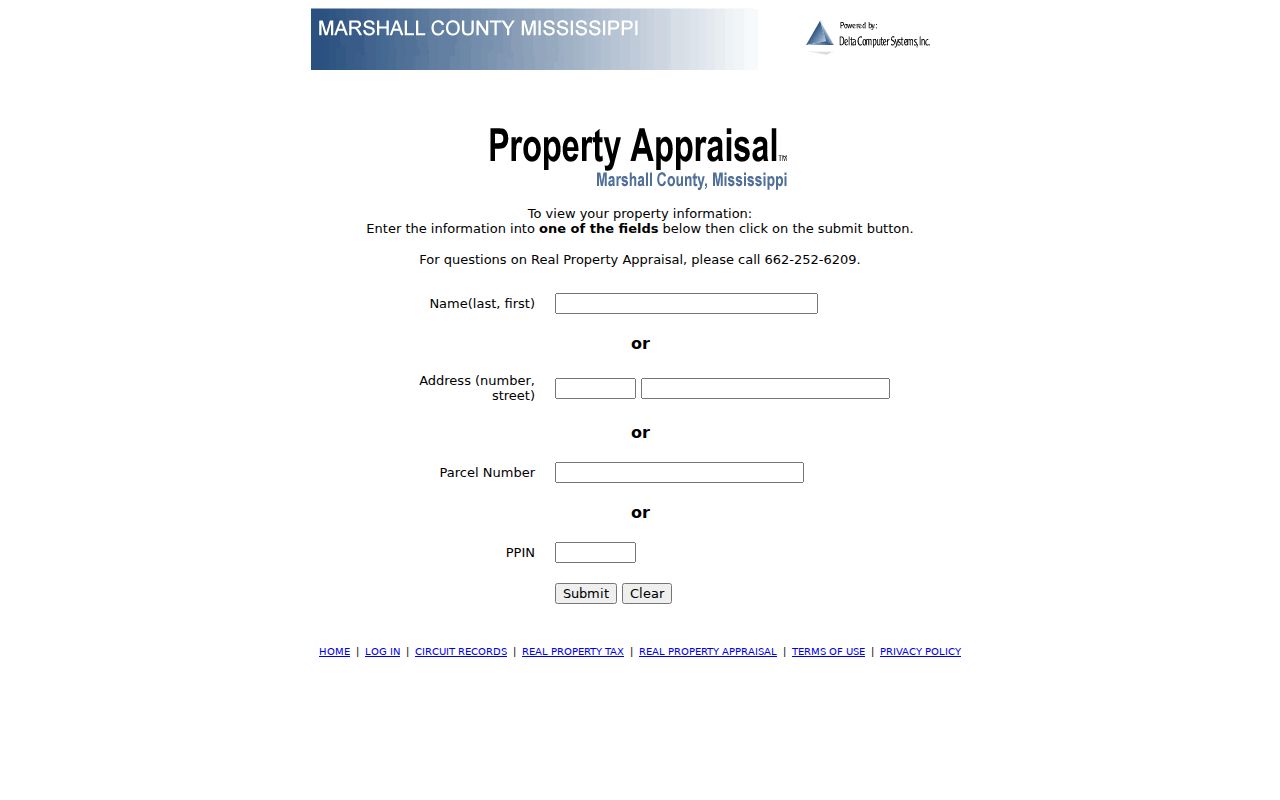
The search form makes the case for a parcel number or PPIN. When an owner name is common, or an address is formatted oddly, the identifiers cut straight to the right record.
Separate Lee County Mailing and Situs Values
A situs address marks where the land sits. A mailing address directs notices. It may point to another home, a post office box, an agent, or an office. Neither field alone proves occupancy. Preserve each under its own label. Never copy a correspondence address into the site-address field just to force two sources to agree.
When an address search fails, try alternate street spellings first. Then fall back on the owner, parcel, or PPIN. GIS identify-by-location can yield a parcel clue, and the deed's legal description settles the match. ZIP codes route mail and can cross city limits. They prove neither municipal jurisdiction nor ownership.
Interpret Lee County Entity and Estate Owners
The roll may carry an LLC, corporation, estate, or trust-related name instead of an individual. Search the exact entity form in CRMS, punctuation and suffix variants included. For an LLC or corporation, the Mississippi Secretary of State services directory helps separate the legal entity from its officers or registered agent. None of that turns the agent into the landowner.
Estate or court involvement often explains why a roll and deed disagree. A probate order, partition, quiet-title judgment, or foreclosure can each reshape the record trail. Still, tie any deed or court instrument to the same legal description and parcel before trusting the connection.
A Lee County Tax Payment Does Not Create Ownership
Lee County warns that paying taxes for seven years does not automatically create ownership. A tax-sale buyer, a certificate holder, and a redemption event each play a role. The current titled owner is a fourth, distinct role. Check the Tax Collector for delinquency and redemption status. Then check the Chancery Clerk for any matured tax-lien instrument or later deed.
The distinction matters. A name tied to a tax payment looks authoritative. It answers a different question entirely. Keep payment, assessment, and conveyance evidence in separate columns when you identify a current owner in Lee County property records.
Use Lee County Owner Data Lawfully
The public mailing field supports good-faith property inquiries. A purchase proposal, boundary concern, easement question, or estate matter all qualify. It does not license anyone to infer a private residence or reverse-engineer a protected location. Mississippi's Address Confidentiality Program supplies substitute addresses for eligible victims. Those protections deserve respect.
Recent-sale caution. The roll can lag a recent deed. For a time-sensitive ownership question, compare the newest recorded grantee and confirm through the official courthouse index.
Choose one clear, respectful contact method and stop if asked. Owner information must never be used to stalk, harass, intimidate, or harm anyone.