
Compare the Values Attached to Lee County Property
No single figure defines a Lee County property value. The assessment roll splits its numbers into land, buildings, a full or true value, an assessed value, and a taxable value. A recorded deed adds another figure: the consideration paid in a transfer. Each amount was built for a distinct purpose. But each may reflect a different date than its neighbors on the roll.
| Value type | What the number means | Record to consult |
|---|---|---|
| True or market value | The assessor's full-value estimate under state appraisal rules | Lee County assessment record |
| Assessed value | The ratio-based amount to which millage is applied | Assessment roll |
| Taxable value | The amount remaining for tax treatment after applicable adjustments | Assessment and exemption record |
| Sale consideration | The amount reported with a particular recorded transfer, if indexed | CRMS deed result and image |
| Land and improvement values | Separate components that help explain the assessor's total | Parcel-card fields when displayed |
A sale price and an assessment can differ without either record being wrong. Consideration belongs to one transaction; assessed value belongs to the tax system. Keep the year and the source attached to every number you copy.
Mississippi's Ratio Shapes Lee County Assessed Value
The Mississippi Department of Revenue appraisal guidance draws a clear line. It separates true value from assessed value. Class I owner-occupied residential property is assessed at 10 percent of true value. That ratio explains the gap. An assessed figure can sit far below a full-value estimate. The state formula simply builds it that way. Run the arithmetic once and the system clicks. A true value of $200,000 at the 10 percent Class I ratio yields $20,000 in assessed value. That figure comes before any other tax treatment. That is state-rule math, not an estimate for a particular Lee County parcel. Confirm classification on the actual record before applying it. Local millage then multiplies the assessed value to produce ad valorem tax. That calculation belongs on the tax-record page. The point to carry forward is simpler. Never read a ratio-based assessed value as a likely sale price. Note: Verify the property class on the Lee County roll before applying any ratio. Not every parcel receives Class I residential treatment.
Read Lee County Value Components as a Set
A Lee County parcel card, taken as a set, may hold land value, improvement or building value, total or true value where displayed, assessed value, taxable value, exemptions, property class, acreage, and sale-date fields. Let the live card's own wording control what a specific result is called. The exact labels can vary from screen to screen, so record the field names as they appear for your parcel.
- Land: the assessor's value component assigned to the site.
- Improvement or building: the component tied to taxable structures or improvements.
- Total or true value: the full-value figure if the Lee County card displays one.
- Assessed value: the amount produced after the applicable classification ratio.
- Taxable value: a later figure that may reflect exemption treatment.
- Sale fields: dated transaction information, not a substitute for the recorded deed.
Read every component from the same assessment year. Pairing a current land value with an older building figure or a prior sale amount builds a comparison the source never made.
Look Up a Lee County Property Value by Its Record Key
The Delta Real Property Appraisal portal accepts an owner name, address, parcel number, or PPIN. An exact address is usually the easiest way in. A parcel number or PPIN lifted from a tax bill or deed record works even better when similar street names invite mix-ups.
- Choose the address search and enter the number and street, or use the exact parcel number or PPIN from another Lee County record.
- Confirm the owner, situs, parcel identifier, legal description, class, acreage, and assessment year before reading value fields.
- Record land, improvement, total or true, assessed, taxable, and exemption fields exactly as displayed.
- Search CRMS separately when a sale consideration or recorded transfer date is needed.
- Save the source date because the assessor, deed index, and GIS layers do not share one refresh clock.
- Assessed value
- The ratio-based figure used within the property-tax system.
- True or market value
- The assessor's full-value estimate for appraisal purposes.
- Assessment ratio
- The percentage applied to true value for the property's class.
- Sale or consideration price
- An amount associated with a recorded transfer, where stated and indexed.
- Reassessment
- The process of updating appraised values on the state and county cycle.
The county Tax Assessor also takes questions by phone and in person during posted weekday hours. If the portal balks at an address, hand the office the parcel or PPIN, the legal description, and the assessment year instead of guessing at the record.
Lee County Value Searches Begin With Four Inputs
The official Lee County appraisal search offers four routes in: owner, address, parcel number, and PPIN. Its landing screen lays out those choices plainly before a value search begins.
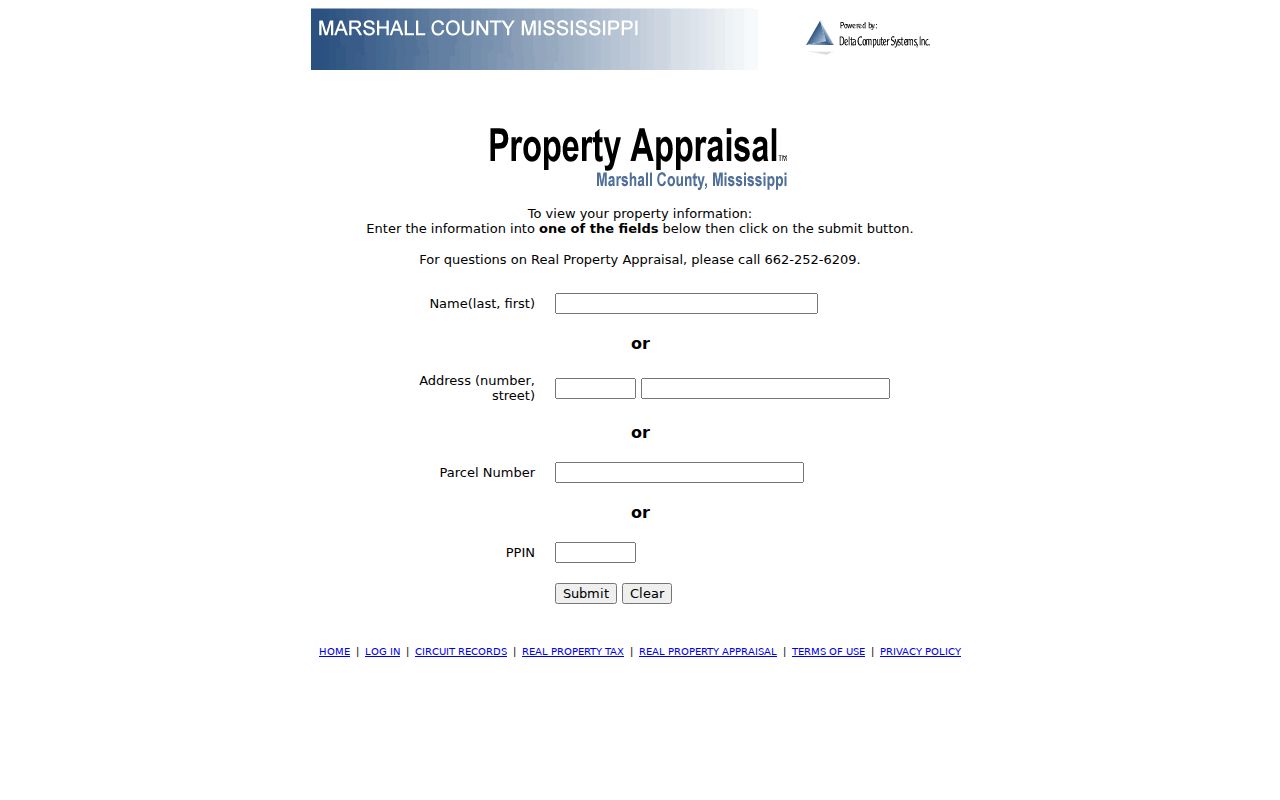
The portal page displays the search form itself rather than a valuation. Result screens can vary by parcel, so let the value-detail card you open supply its own field labels. Treat any field the card does not show as absent for that record.
Recorded Consideration Is Separate From Lee County Property Value
The DuProcess instrument index includes consideration minimum and maximum criteria plus sale-related columns where indexed. The deed image, instrument type, and parties give that number its context. The recording date and legal description add to it. A zero or nominal amount often marks a non-market transfer. Family, estate, trust, and corrective deeds account for many such entries. A deed of trust is not a sale deed. Even an arm's-length sale may date from a market period far removed from the current assessment year. Use consideration as transaction evidence. Then set it beside the Lee County assessment as a separately dated record. Do not force the assessor's property value to match the deed amount. Neither figure predicts the next sale. Note: Confirm the instrument image and legal description before treating an indexed consideration amount as evidence for the same parcel.
Revaluation Gives Lee County Values a Different Clock
Mississippi DOR guidance calls for revaluation at least every four years. Physical changes and roll maintenance can touch records on other schedules. The assessor portal publishes no fixed refresh interval. A recent construction event, parcel split, or sale may therefore reach different public systems. The timing can differ across systems. So compare like years. Record the assessment year and any visible appraisal date. Note the deed recording date and the GIS layer date. CRMS's daily update statement does not carry over to the assessor roll. The county ArcGIS item's update date does not govern every underlying value field.
Four clocks. Recording, assessment-roll, GIS-layer, and municipal-permit dates can differ. Label each source instead of merging them into one timeline.
Exemptions Alter Lee County Taxable Value, Not Sale Evidence
Exemptions work on the taxable side of a Lee County record. Homestead relief, senior treatment, and similar programs trim the assessed figure. The tax bill draws from that figure. None of that touches the consideration written on a deed. The recorded sale price stands as history. An assessed value never becomes an appraisal of what the parcel would fetch on the open market.
The Mississippi DOR homestead guidance lays out statewide eligibility rules and the grounds for disallowance. Locally, the Lee County Chancery Clerk takes homestead applications. Check the parcel card or the county office. Confirm whether an exemption applies for that year.
Bills, deadlines, exemption filings, and assessment appeals belong elsewhere. This valuation page ends with what the numbers mean and where they come from.
What Lee County Property Value Records Cannot Settle
An assessment is a mass-appraisal figure built for public administration. It cannot weigh every repair, interior feature, easement, or deal term. A private sale might hinge on any of these. Recorded consideration marks a past event, not today's offer price. Neither number amounts to a title opinion.
Value is not price. Lee County assessed value supports taxation. It is not a promise of what the property would sell for and is not an independent appraisal.
For a transaction-specific figure, hire a qualified appraiser and get proper title or survey advice. Treat the public values as dated evidence with a named source. They are not a guarantee.